Lebanon conflict drives mental health crisis for displaced women: ‘We hear, see and feel pain constantly’
Escalating conflict in Lebanon has forced hundreds of thousands of women and girls to flee their homes, and women are on the frontlines of the response
The escalation in Lebanon, now in its sixth week, has stoked fear across the country and led to a mass displacement crisis, with women and girls disproportionately affected. UN Women estimates that one quarter of all women and girls across the country have been displaced since 2 March.
Since the escalation of the conflict, an estimated average of 16,750 women and girls have been forced to flee their homes each day[1] due to widespread violence and evacuation orders, with women and girls from South Lebanon severely impacted. Many are staying in informal arrangements and overcrowded shelters; while taking care of children and the elderly.
Faten*, 42, was displaced from Tyre to Barja. When she arrived she was exhausted and overwhelmed. She is one of more than an estimated 620,000 women and girls who have been forced to flee their homes.[2]

Displaced women rely on Barja Health Center for urgent psychological support
Faten fled with her three children after losing her husband. She relies on support from the Bishop Maroun Al Ammar Primary Healthcare Center in Barja, Chouf, which has become a hub for displaced families seeking healthcare and psychosocial support. Nearly 70 per cent of those seeking care are women, many of whom are now the sole caregivers and providers for their families.
Women are serving in critical roles on the front lines of the humanitarian response
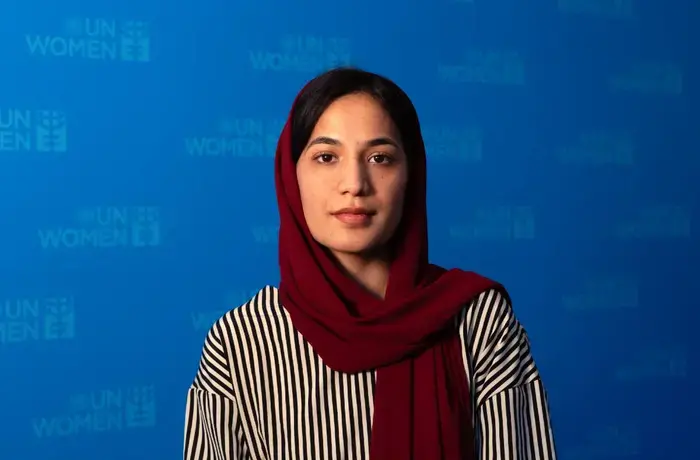
Faten’s primary source of support is Fatima Al Shamma, 28, a social worker working on the front lines of Lebanon’s humanitarian response. Every day, Fatima provides support to women who have lost homes, loved ones, and their sense of stability. Many have been displaced multiple times and are now living without access to even the most basic necessities. Fatima prioritizes listening to the women she supports, to truly understand their needs, before providing guidance.
“At first, most women hesitate”, Fatima says. “But gradually, they begin to speak. And when they do, you realize how much they have been holding inside, how disoriented and emotionally exhausted they are.”
Many women share the same sentiment: “I am alone. Who will stand by me?” explains Fatima.

Displaced women face increased burdens and limited support
Displacement and conflict intensify existing gender inequalities, including increasing caregiving responsibilities for women and girls who face extreme psychological distress. Yet access to support remains limited. Services such as counseling are especially scarce, leaving many women to cope with the emotional and psychological burden of displacement largely alone.
The Lebanese Government has established 677 collective shelters across Lebanon, all but 11 are at capacity, with overcrowding leaving little room for privacy for women and girls.
Did you know?
There is a hidden crisis among women in conflict. While bombs and bullets make headlines, for millions of women and girls, the trauma of war, displacement, and repression is taking a devastating toll on their mental health.
Almost everyone affected by a humanitarian crisis experiences psychological distress. Around 1 in 5 people will go on to develop long term mental health conditions like depression, anxiety, post-traumatic stress disorder (PTSD), bipolar disorder or schizophrenia. Yet only 2 per cent get the care they need.
What is UN Women doing for women and girls impacted by the conflict in Lebanon?
UN Women is scaling up gender-responsive mental health and protection services, establishing safe spaces for women to speak, connect, access referrals, and begin to heal. These efforts aim to restore well-being and ensure women’s agency, leadership, and dignity, while supporting community-based protection.
Before receiving support from Fatima, Faten was exhausted by the grief of losing her husband and the responsibility of caring for her children alone. Through psychosocial support, centred around listening, Faten has begun to regain a sense of stability. After a while, something began to shift. Not because her reality changed, but because she no longer faced it alone. She now comes to the centre weekly to receive care and to simply be in a space where she feels safe and supported.
“Mental health is the foundation of everything”, Fatima explains. “Without it, recovery is not possible.”

Most people at the centre need urgent psychological care
Each day, the centre supports around 100 people, more than 60 of whom need urgent psychosocial support. Samar*, 34, from Bint Jbeil, was among those in need of urgent support after she fled her home, leaving behind everything, documents, and medication for chronic illness – adding to the intensity of displacement and worsening her mental health.
Fatima is particularly concerned about adolescent girls and young women, who report increased anxiety, trouble concentrating, and a loss of hope. “At their age, they should be looking ahead to the future”, says Fatima. “Instead, they are trying to survive a crisis with no clear end.”
To meet the growing needs of women and girls, the centre is expanding psychosocial support through group sessions, safe spaces, and community activities. It is also engaging young people in volunteer initiatives.
For those providing support, the emotional toll is significant.
“This work is emotionally demanding every single day”, she adds. “We hear, see, and feel pain constantly. But stopping is not an option.”